Hertz Summer Workshop organizers spend considerable time and effort deciding on the event’s location and use of space. On the whole, the 2025 workshop was successful in its logistical decisions: The choices made about how to set up the venue and structure the event promoted engaging and deep conversation across all group sizes, from 1:1 and small group interactions to the large main sessions.
Location and Space:
Credit: Hertz Foundation
Spreading out / Filling the space
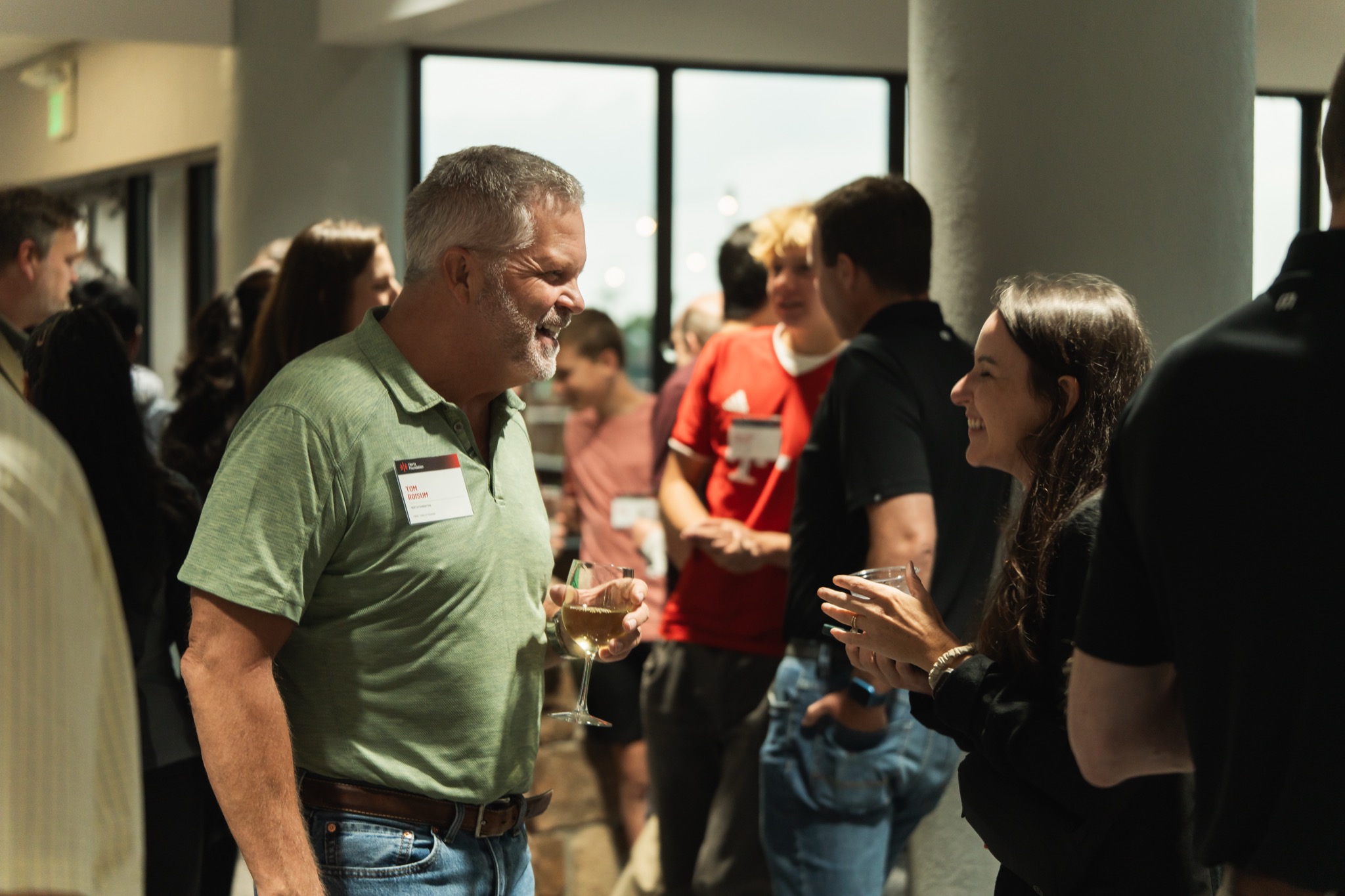
When thinking about the logistics and spatial usage for the Hertz Summer Workshop, evaluators noticed a preferred way that summer workshop attendees interacted spatially with one another. When attendees had the time and space, they would gravitate towards small groups of between 3-5 people talking. These groups would be spread as far apart as possible in the space that was provided, likely to make it easier to listen to one another. When there was space to move even further apart, such as onto the far reaches of the deck or into spaces upstairs, or in the lobby, those spaces were almost always occupied by groups of attendees. Attendees did circulate - especially during the intended socializing time - but tended to continue to break into these small groups of three to five people even when they moved or joined groups. There was an almost unwritten rule that larger groups would break into smaller discussions.
For example, after the evening dinner session on Saturday, attendees were talking at the far ends of the room in small groups, some standing and some sitting. At the morning brunch on Sunday, when the workshop attendees were allowed to sit openly with speakers, attendees gradually sorted themselves into small groups. This was the same pattern during the receptions as well, though with slightly more dense groups joining together given the space restrictions.
We heard the feedback in the survey that the engineering challenge was held in a room that was too loud and too small. This underlines the need for many of the attendees to have space to spread out and to talk to one another. Additionally, for folks with disabilities or who are neurodivergent, a small, cramped room can be a barrier for participation.
This tendency of summer workshop attendees to spread out in small groups in a wide space is likely the result of the priority that attendees give to engaged conversation with one another and the desire for small group interactions where they could hear every detail of the conversation. Knowing that the attendees will fill up space by spreading out to take up most of the floorspace is a helpful tool for planning future events. We recommend looking for slightly more space than might be assumed for a group this size, as attendees will assuredly fill it.
Passive Learning
Another attribute of workshop attendees’ logistical preferences is that they liked “passive learning” opportunities ( e.g. through written material, posters, or things that they could absorb on their own time). There were several comments asking not only for more talks, but more ways to learn about the new fellows in this passive way:
We should also have whiteboards around during receptions, so we can draw out ideas. A poster session would also be cool, or the option to have posters out during a reception.
A page summarizing where the graduating fellows are headed would be instructive
While I appreciate the introduction of the new Fellows, I would also have found useful a poster board with the former Fellows attending, their current positions and their fields - perhaps a companion board to the one listing the speakers and times next to the registration desk.
Credit: Hertz Foundation
Swag and Provisions
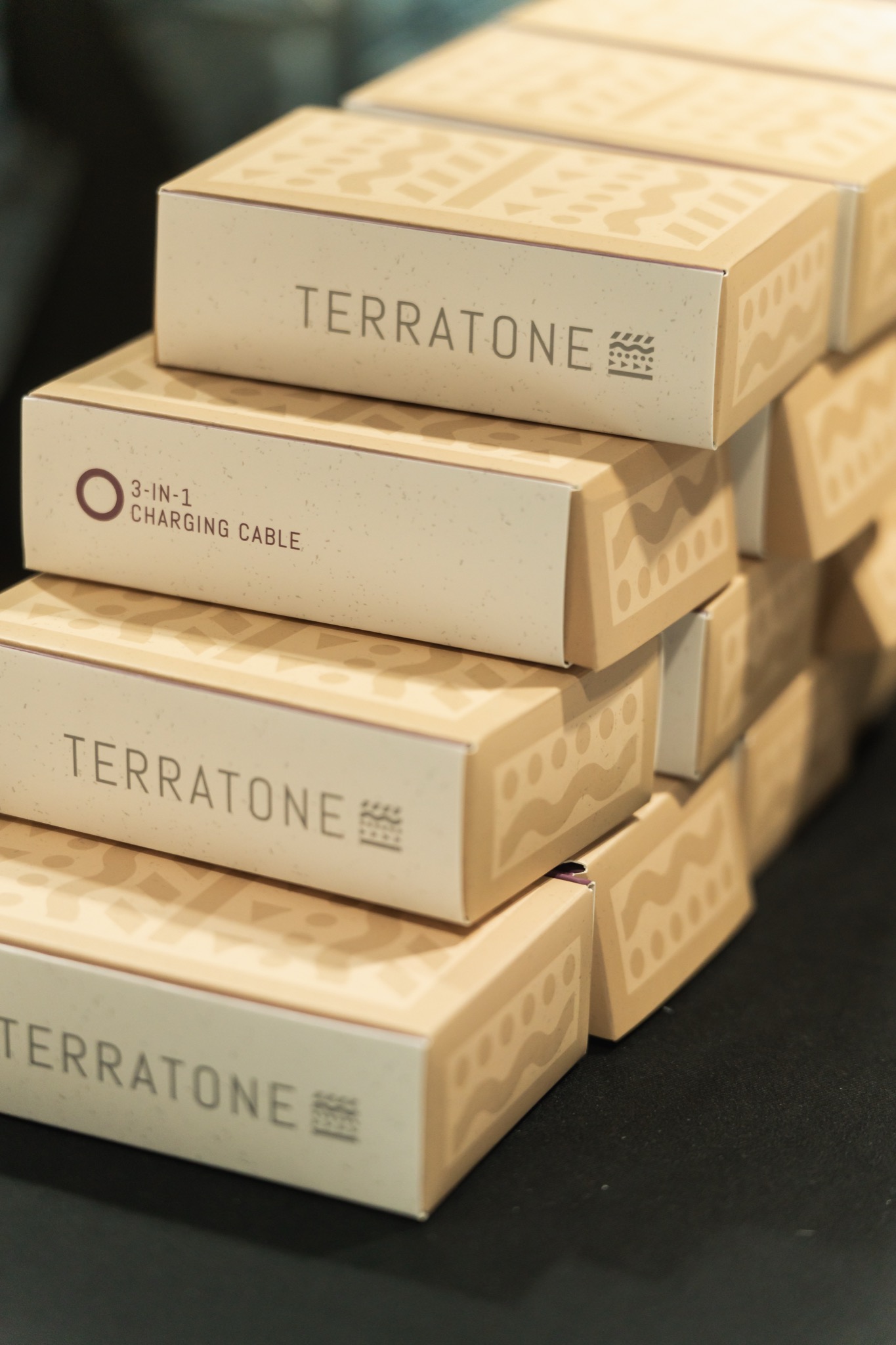
Evaluators spoke with attendees about the swag that was offered both at the conference and that was sent to them after the workshop. At the conference, folks received a pen and a charging cord if they desired. They were also given a link to request a t-shirt or tote bag from an online source to be sent to their home or office.
We heard generally positive feedback regarding the phone charger, with folks saying it was “useful”, “very cool”, “wonderful” and “logical.” On the first day after they received it, folks carried around the boxes that contained the charging cords, placing them under lunch table seats and onto the tables as many didn’t have a bag to put their chargers in. Generally attendees liked and seemed to use the pens during the workshop.
The on-demand shirts and tote bags had generally positive responses as well. One evaluator watched as younger fellows went directly online on their phones and ordered their swag. An attendee said she thought the tote bag would be most useful to her. Another was impressed that he got an email back so quickly saying that the source had already shipped his shirt.
We also heard from one fellow that they liked being able to order shirts with the measurements listed because they often have trouble fitting long sleeves. Having the measurements online allowed them to be sure it would fit. That said, some responses to the survey said that they wished there had been some examples for them to take a look at in-person before ordering. One person in the survey said “The only swag I got was the charging cable. I tried to use the QR code to log into the shop, but it did not work.”
Whether intended or not, some attendees also got to take home centerpieces from tables at the Saturday night dinner. The magnetic orb was intriguing to this community of scientists, and the opportunity to take one home was appreciated:
Very nice. My favorite is the center piece globe lights from Saturday night, which is in my living room. My wife took the portable USB charger on her camping trip this week.
Swag plays an important role in keeping the community feeling connected, as evidenced by the number of attendees who wore or displayed swag from previous years (some from a decade or more ago).
Those who didn’t appreciate the swag said that they “didn’t need” another charging cord. One fellow who was older and retired said they wished that Hertz had saved the money. Some commented that the idea of swag in general is unhelpful for reducing waste. One example: “I would have preferred just a simple notebook and pens. I don’t think I need ‘swag’ like a charger or a cheap water bottle-- it’s a bit counter to Hertz’ support of the climate and reducing waste.”
Suggestions for future swag from the survey included: a fidget spinner, small bumper stickers, desk ornament, jackets, half zip, more shirt/sweater options including dress shirts, fleece, stickers, bookmarks, keychains and functional materials like bags and totes.
Credit: Hertz Foundation
Feedback about food
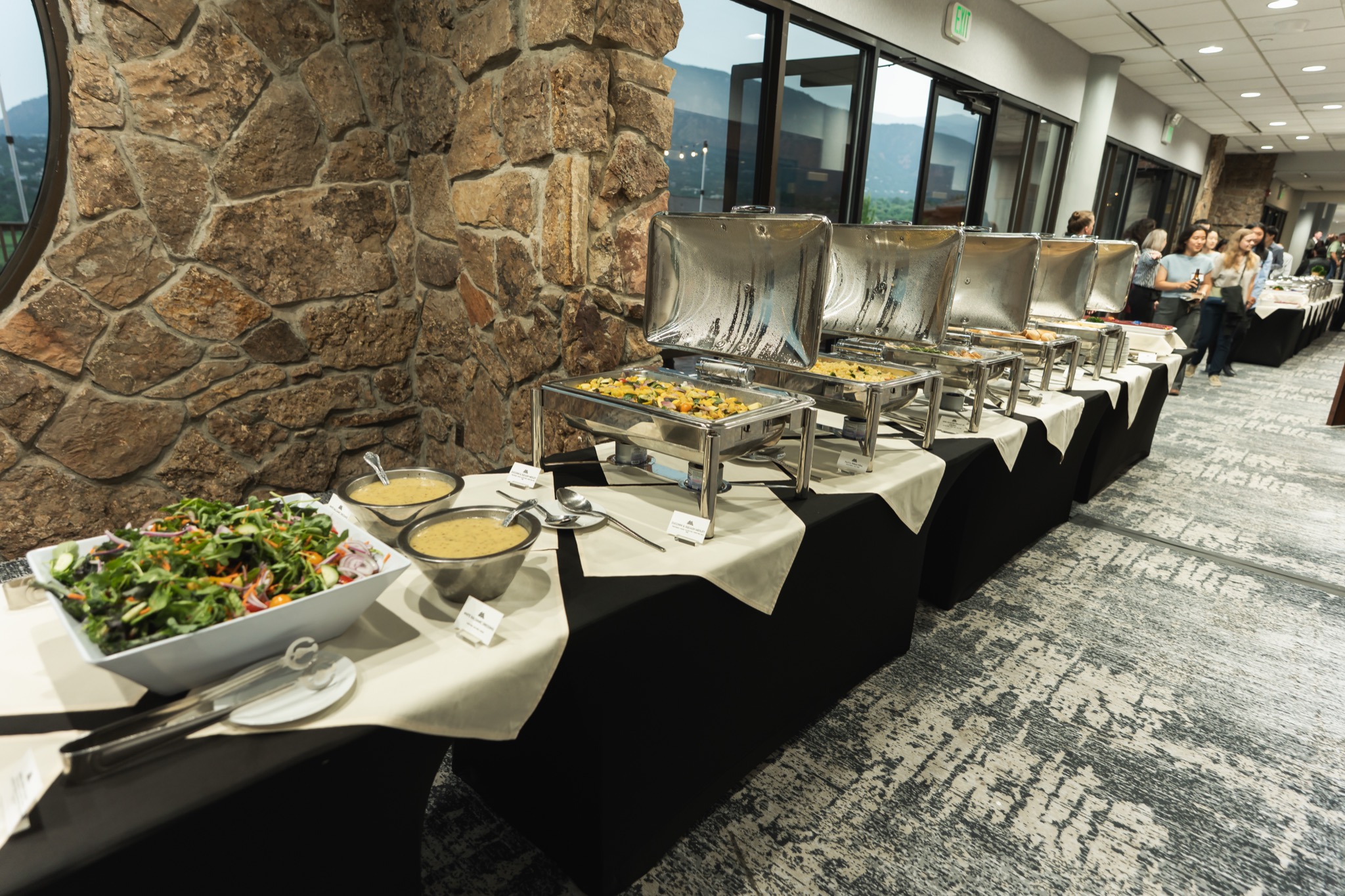
The food was plentiful and available for breakfast, lunch, dinner and breaks. Folks seemed to enjoy the range of what was available. That said, there was some feedback that the food could be improved. In the buffet line, some folks questioned what the ingredients were, and if certain unlabeled bowls that held small amounts of food were intended to be for vegans or vegetarians. When asking the wait staff for more information, their responses were unclear.
The survey produced some comments about food:
I’m not vegetarian, but I did notice the vegetarian options for food seemed a bit limited.
It would be nice to have more vegan options and more clear labeling (I was confused as the dishes that were labeled V were listed as having mozzerella, and some of the dishes were not labeled)
More accomodating of dietary restrictions please!
Food was mediocre
Credit: Hertz Foundation
Feedback on the Location
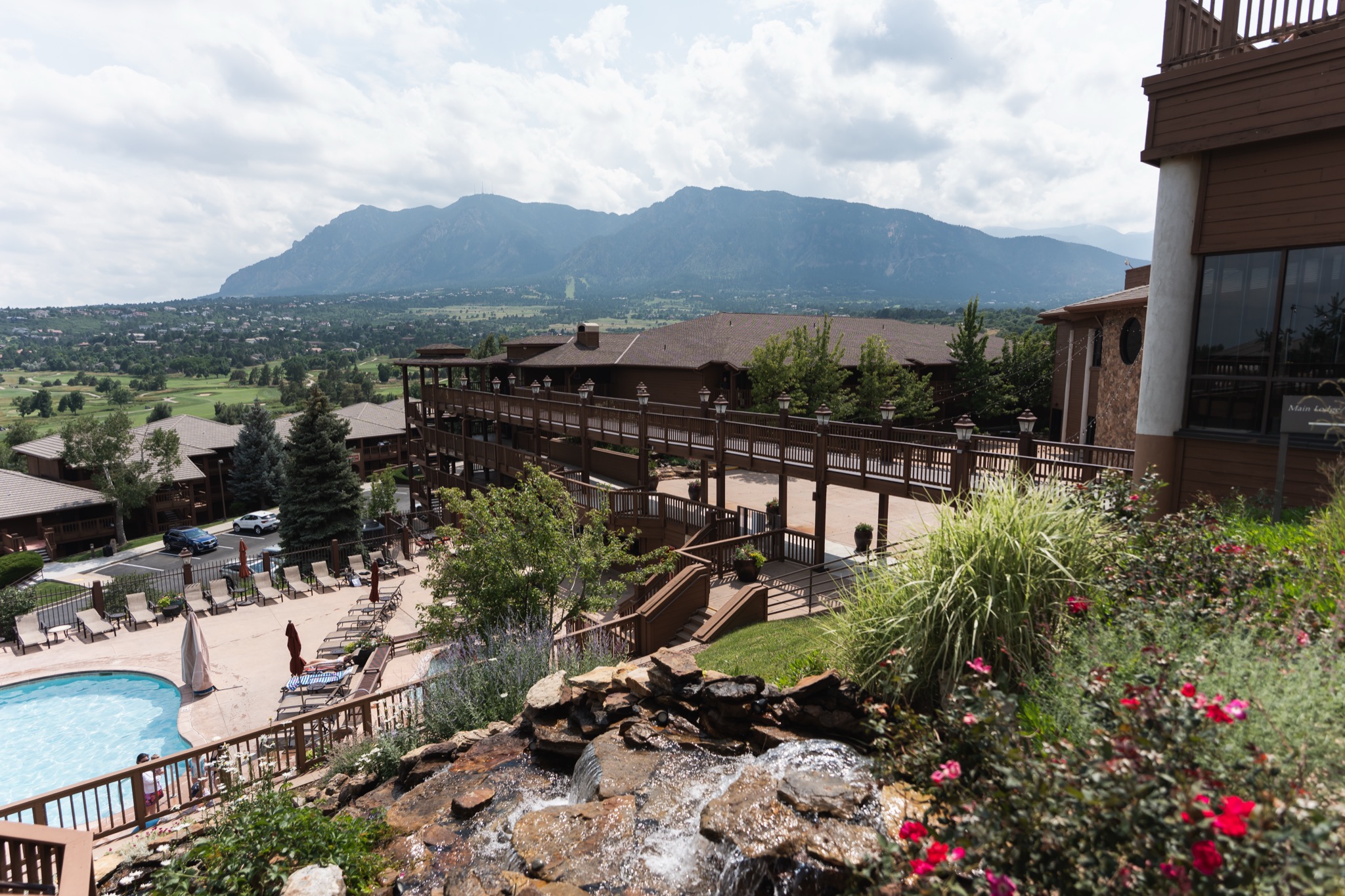
The location was generally appreciated with folks commenting on the beauty of the scenery, the mountains and the location. Some folks wished for additional spaces for informal networking, citing examples from previous locations.
Comments on the location and venue included positive responses:
Very nice, good scenery, not too crowded
Wonderful! Gorgeous view and isolated enough that participants did not leave to do other activities. It was lovely to have access to outdoor activities as well.
Beautiful. I liked the resort features which were laidback enough for a casual vibe but had some very nice amenities for the afternoon activities
The location was beautiful and peaceful—a great setting for Fellows to connect, reflect, and build meaningful relationships.
The main complaint about the location centered around the difficulty of taking multiple flights to get to Colorado Springs and the desire to be closer to a major airport. One person also remarked on the challenge of altitude sickness.
Would be nice to pick locations with nonstop flights from Boston/SF in the future.
Beautiful but I wish it was close to a major airport
Loved it, but had I been flying in I would have been grouchy about COS vs DEN.
Loved the vibe, really really would have preferred to be in taxi-ride distance of a major airport to avoid delays and lower costs.
Hybrid Conference Preferences
Evaluators developed a set of questions in the survey asking for feedback on the idea of doing a hybrid summer workshop, as the Hertz team is actively considering how a hybrid event might increase the level of participation for fellows who could not travel. We heard resoundingly that attendees to the summer workshop did not see an online or hybrid summer workshop as a viable option.
Attendees expressed a desire to preserve the in-person connection and the special connections they felt. They expressed clearly that the benefit of the summer workshop is in the conversations with other attendees and they did not believe that a similar kind of experience could be had online. Additionally, they worried that by providing an online option folks would be less likely to attend in-person, diluting the experience.
A set of responses from the survey capture this sentiment:
I think 90% of the value of the retreats is by connecting with others face to face. A hybrid option dilutes that and may dissuade people from attending in person.
Forcing face-to-face helps to raise the bar and so improves the quality.
Virtual attendance would not compare to in person and I worry that it would either reduce in person attendance or interfere with the in person experience.
I don’t think that connections can ever be as strong or long-lasting virtually as in person. I think in person attendance in incredibly important for fostering the connections that Hertz hopes to through the summer workshop.
It could be nice to have recordings of some of the talks, but I fell that virtual attendance basically defeats the primary purpose of a conference like this - to build connections and grow community. You can’t do that effectively on zoom
It just wouldn’t be the same; what I liked the most were the spontaneous face-to-face interactions and making new friends, not necessarily the talks
Some respondents also talked about the nature of the talks being more valuable because they are not recorded or streamed online:
I really enjoy the in-person connections at the workshop and I feel online webinars/recordings of the talks would reduce the “off-the-record” flavor a lot of of the talks have!
When we asked folks to talk about why they were not interested in having a hybrid event, we heard a lot of rationale and caution about making a hybrid event work:
Even in the best cases, there are still disruptions to the in-person experience by adding hybrid options to any conference. I’d prefer to see the workshop preserve it’s highly social, dynamic nature.
Would change the vibe.
Might be good if there’s a financial burden for non in-school fellows, but otherwise I think it’d make the experience worse. You would lose the benefits of in-person interaction.
Running hybrid events is incredibly challenging and in my experience usually detracts from the overall experience. Virtual attendees would not be able to network, partake in activities, or be present in the same way as in-person attendees. I think it makes sense to optimize the workshop for in-person attendance and convince as many people as possible to come, which many people would likely not do if there was a virtual option.
I don’t think people get much out of virtual attendance (certainly no more than watching recordings of the talks). It makes the sessions more clunky and difficult to moderate (since you have to cater to people on zoom and in person), and it disincentivizes people from attending in person - which is the most valuable thing for everyone. I would advocate for recordings but certainly not virtual attendance.
Offering a virtual option will dilute in-person attendance, which I view as the main reason to attend (meeting fellows, networking)
This feedback highlights one of the key findings of this report: The Hertz Community has a deep need for and delight in talking with one another in person and creating community through small group conversations and dialogue. That said, improving inclusion and finding new ways to cultivate donors might benefit from some hybrid elements if they are designed in such a way that does not detract from the in-person experience.
Evaluator Recommendations
Leverage hybrid or online formats for events throughout the year: Throughout the workshop, we heard a resounding desire for more opportunities for fellows to connect throughout the year (i.e., between summer workshops). Some attendees pointed out that local/regional meetups would be beneficial, without realizing that the Hertz Foundation already holds such events. It’s notable that some attendees were not aware of these events.
Stream one talk per workshop (or one per day): Attendees appreciated the candor that comes from all talks being in-person only. From a marketing and inclusion standpoint, however, it may be beneficial to select a single talk, or a single talk per day, to stream online. Doing so would help community members who cannot attend feel included while also creating some “fear-of-missing-out” among those who choose not to attend for a variety of reasons.
Increase passive learning opportunities: A substantial number of fellows expressed a desire for passive ways to learn about what their peers are working on. Ideas included a website cataloguing fellows’ work; poster sessions or poster rooms; displays like the “Name a Challenge” slides on TVs throughout the venue; and whiteboards for sharing ideas and messages.