So far, in describing the value of the summer workshop for attendees, we have largely focused on the structure of talks, the opportunities to network, and what attendees leave the workshop feeling better prepared to do. These are similar attributes to most other scientific workshops. In the remainder of this document, we explore the unique, strategic approaches the Hertz Summer Workshop organizers take in creating this productive and energizing environment and what it is that makes the Summer Workshop so valuable.
As the Director of Community and Partnership stated, the workshop’s overarching goal is “Sowing the seeds for generations of fellows to feel connected.” Achieving this goal requires summer workshop organizers to take a community-centered approach to creating value for their workshop attendees. There are a variety of ways that we saw this community-centric approach throughout the workshop: in the way that attendees were welcomed by one another, in the formal and informal mechanisms of parallel play, and in the ample time and organization for off-site social activities.
Credit: Hertz Foundation
Intentional Welcome and Open Conversations
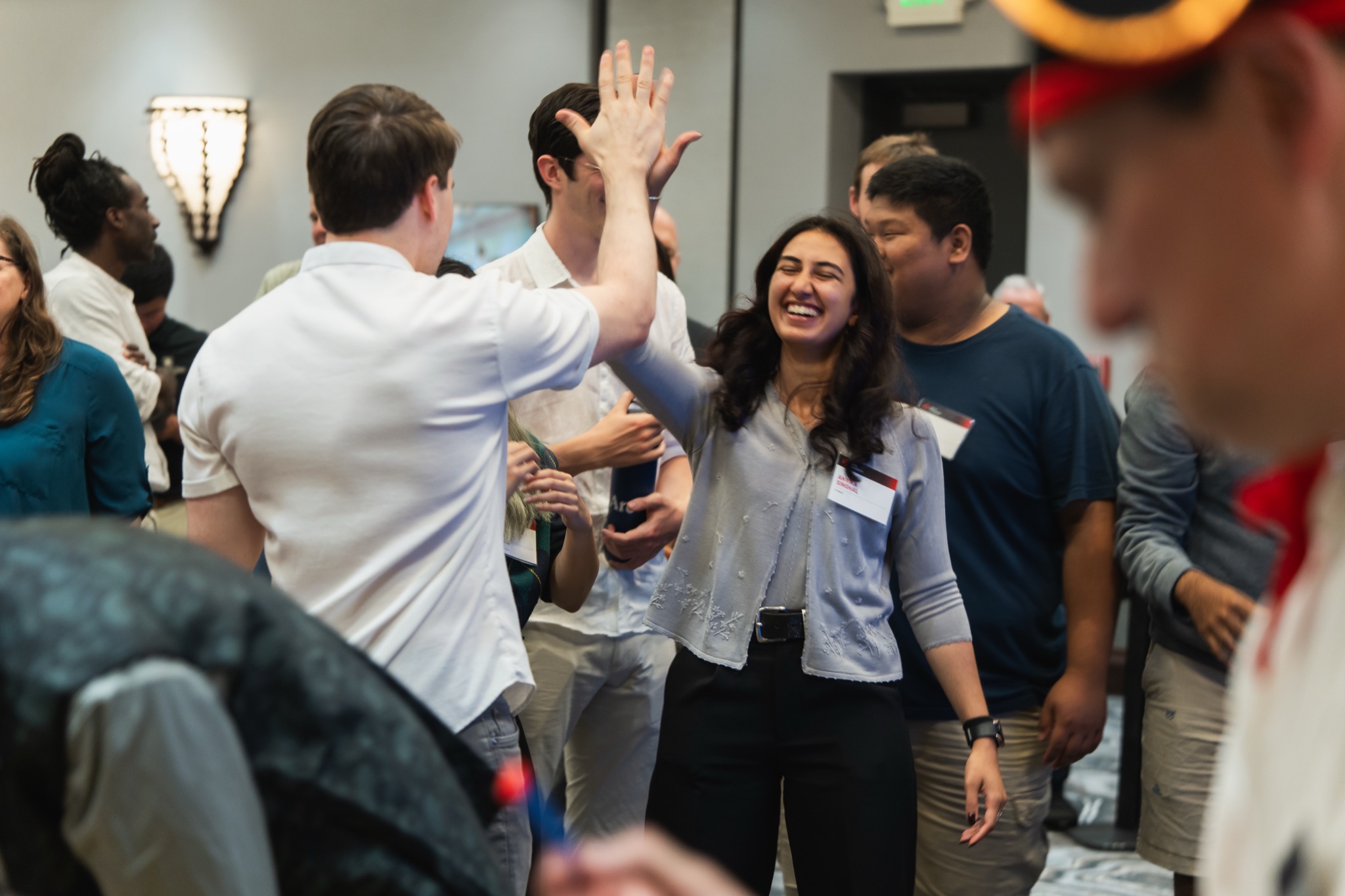
The strength and cohesiveness of the Hertz Community was most evident in the intentionality of the greetings and the openness of the conversations between fellows. At the airport, on the shuttle, in the hotel lobby, at the welcome reception, and during the summer workshop event, evaluators saw people embracing, shaking hands and animatedly talking to one another. This held true across career stages and disciplines, creating an environment where everyone seemed to know each other.
This culture of welcoming went beyond informal greetings. We were perhaps most struck and inspired by attendees’ commitment to including everyone in conversations at their tables during meals and downtimes: When an attendee was not actively participating in a conversation, someone else at the table would demonstrate genuine curiosity about the silent person’s work and bring them into the conversation.
Attendees did the work to ensure that conversations remained at a level that anyone could participate. We observed, for example, two astronomers excitedly discussing highly-technical subject matter during lunch. After only a couple of minutes, one of the astrophysicists paused the conversation and verbally recognized that the back-and-forth had gotten too “into the weeds” for others to participate. Because they were the only astronomers in their cohort, they were excited to connect but acknowledged that they also wanted to include others. They shifted toward asking others at the table about their work and brought the conversation back to a place where everyone could participate.
Attendees were also highly motivated to meet new people and forge new connections. In several of our intercepts, we asked folks how they balance reconnecting with folks they knew versus meeting new people. Respondents described making a concerted effort to allocate time for meeting new people, even if it meant missing an opportunity to reconnect with folks they already knew. As one attendee explained, it was always possible to email an existing connection and reconnect outside of the workshop; making a new connection was not as easy to do asynchronously, so he weighted his time accordingly.
During the time set aside for networking and conversation, workshop attendees who were present spent time moving between groups and socializing. In describing the conversations in survey responses folks used adjectives like “deep,” “engaging,” “energizing,” and “refreshing.” Survey responses indicated that these informal conversations were among the most-enjoyed aspects of the workshop.
Some example responses from the survey of what they most enjoyed about the workshop:
Informal after-hours discussions, dinner discussions
Engaging with other Fellows one on one or in small groups
The chance to meet other fellows and bond, particularly in the engineering challenge.
I loved meeting so many incredible people, and I also enjoyed the talks!
Catching up with friends and meeting new people
Finally, this culture of welcoming and lively conversation extended beyond Hertz Fellows: We saw attendees we knew to be fellows talking with spouses, plus ones, and children of the fellows as well as past summer workshop speakers. There seemed to be very little distinction between the type of attendee with regard to social interaction and inclusion in conversations. In other words, we did not see fellows talking only to fellows and spouses talking only to spouses; all attendees seemed to talk to one another without reference to their background.
Creating this environment takes intentionality and strategy, something that the workshop organizers excel in executing. Attendees engaging in welcoming and open conversations, for example, are encouraged by the informal time built into the workshop’s design: Breaks are lengthy, attendees are not rushed back into the room, and food, drinks, and gathering places are readily available throughout the duration of the workshop. Below, we explore the other specific workshop design decisions that promote a positive, healthy environment at the workshop: parallel play, off-site social activities, and preserving community history.
Credit: Dan Sholler
The Parallel Play Baseline
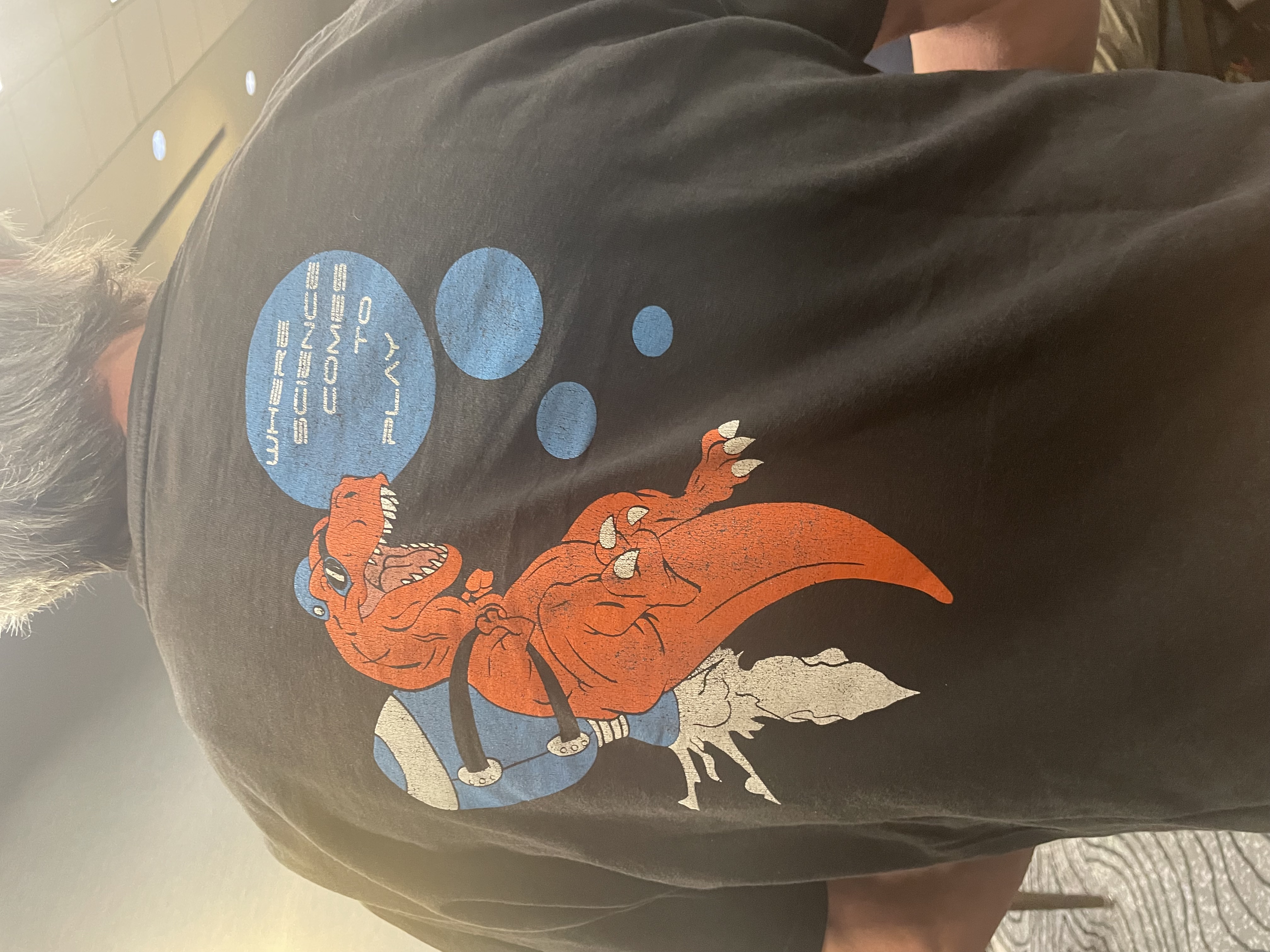
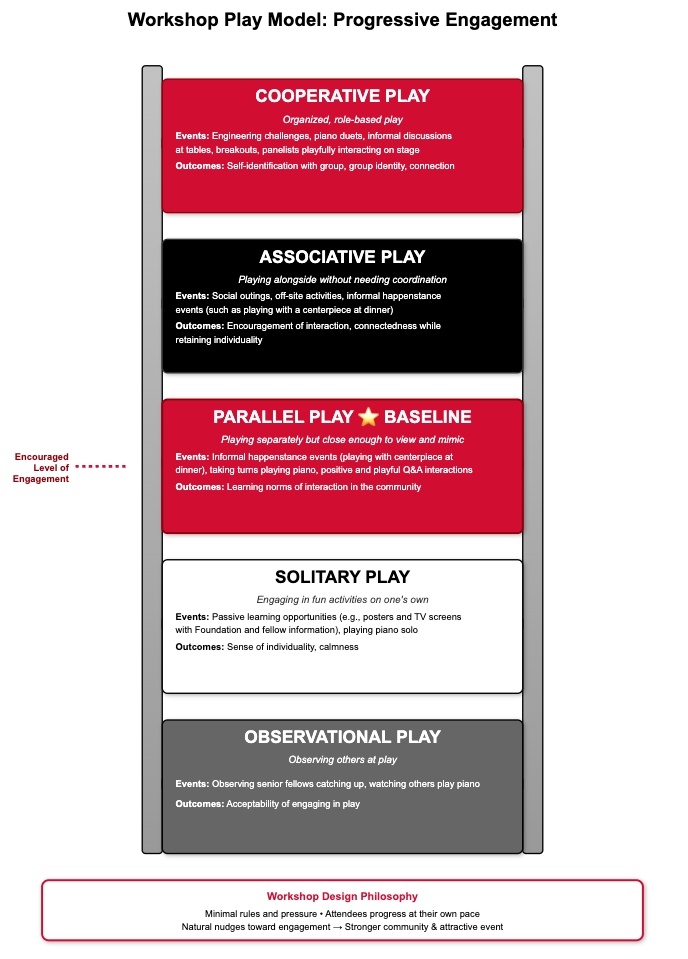
The summer workshop organizing committee seemed well-aware that scientists desire something different from the usual academic workshop or corporate conference experience when attending this annual event. A past tagline for the summer workshop (found on a T-shirt worn by a Senior Fellow)–“where science comes to play”–perhaps best encapsulates the approach. The workshop, from the evaluators’ view, is designed to promote a baseline of formal and informal “parallel play”[2] among attendees, where every attendee enjoys opportunities to participate in fun activities alongside one another with autonomy in how much or little they wish to engage. The goal, of course, is to get attendees into “associative” and “cooperative” play, where they are “playing” with one another and demonstrating deep engagement. Setting a baseline for parallel play, however, is essential to ensuring that folks with various dispositions and levels of desire for social interaction can comfortably participate. This is a unique attribute of this conference and we encourage the Hertz staff to highlight the value of this for attendees and in future events, building on the model depicted below.
Credit: Hertz Foundation
Engineering Challenge
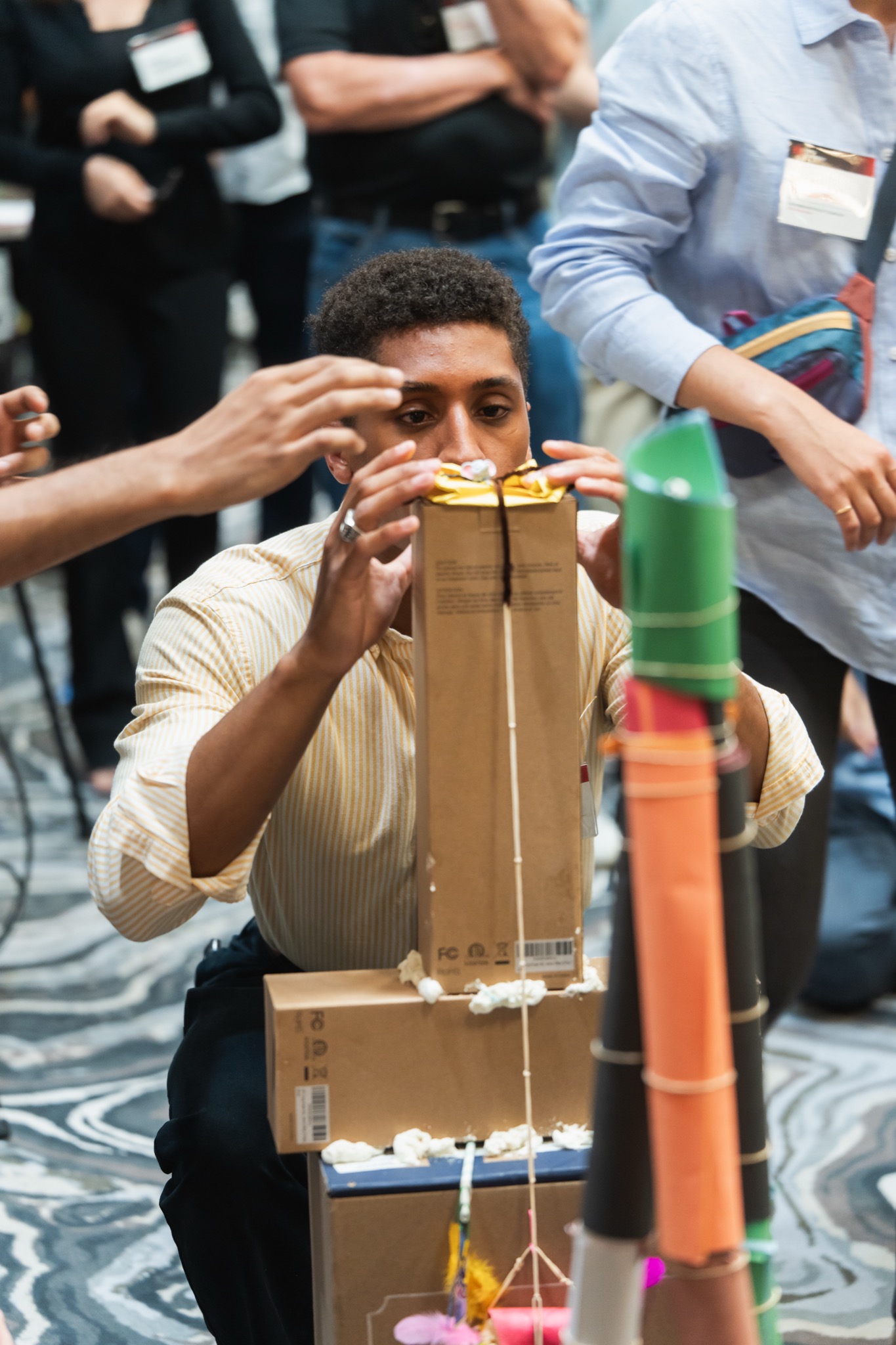
Formally, we saw parallel play during activities like the engineering challenge, an event designed to give attendees the chance to work together in groups. Teams created structures out of random materials (e.g., pipe cleaners, feathers, rubber bands, straws, toothpicks, paper) that would withstand a shake table (to simulate an earthquake). Attendees worked alongside each other, sometimes getting on the floor, running around the space, fastening materials together and otherwise working together to create these structures.
The mood at this event was lighthearted, engaging and enthusiastic. All attendees and their guests were invited to participate. Children were involved in constructing and also “testing” these structures. During the construction of these structures, there were mini puzzles that had participants running around the conference venue to find useful items for the structures. Participants also used materials from the venue (and later put them back when they were asked to).
One of our evaluators participated in the event and saw a sense of community develop on their team. They also experienced a lighthearted rivalry with other teams who would joke about their structures, “spy” on one another and tease about how well teams were doing. Team members cheered on their structures, applauded when they withstood the challenges and high fived, danced and jumped up and down when the outcome was positive.
Credit: Hertz Foundation
Much like was noted in previous years’ evaluations, many attendees marked the engineering challenge as one of their favorite parts of their time at the summer workshop. Our evaluation team believes there are several key components that make the event a success:
Activities require collaboration to reach the outcome: The engineering challenge requires teams to build something together, making collaboration–in whatever form it takes–a central part of the activity. The puzzles, for example, gave participants the opportunity to ask each other for help and work together in a very focused way, an important feature for folks who hesitate to engage in social interaction. Likewise, the small accomplishments throughout the challenge give participants an “excuse” to high-five each other, celebrate, and otherwise be playful. For some attendees this kind of enthusiasm can feel frenetic and challenging, yet many also felt that it was a key way of making connections with others.
Attendees can engage to their desired level: The workshop organizers make it clear that no one is required to participate in the engineering challenge and that observers are welcome. The challenge does not require teams to have specific roles or responsibilities, meaning that each member of the team can work on what they are interested in. The “parallel play” model shines in this environment because team members are able to work alongside their peers without pressure to interact in ways that are uncomfortable to them. This openness to different forms of participation puts attendees at ease, which we observed as having a positive effect on the resulting teamwork and collaboration. In short, the engineering challenge allows attendees to interact and work together organically rather than being forced into specific collaboration structures. This characteristic, however, runs the risk of excluding people who do not enjoy a fast-paced, highly-competitive atmosphere. In other words, these folks may just leave rather than find ways to participate.
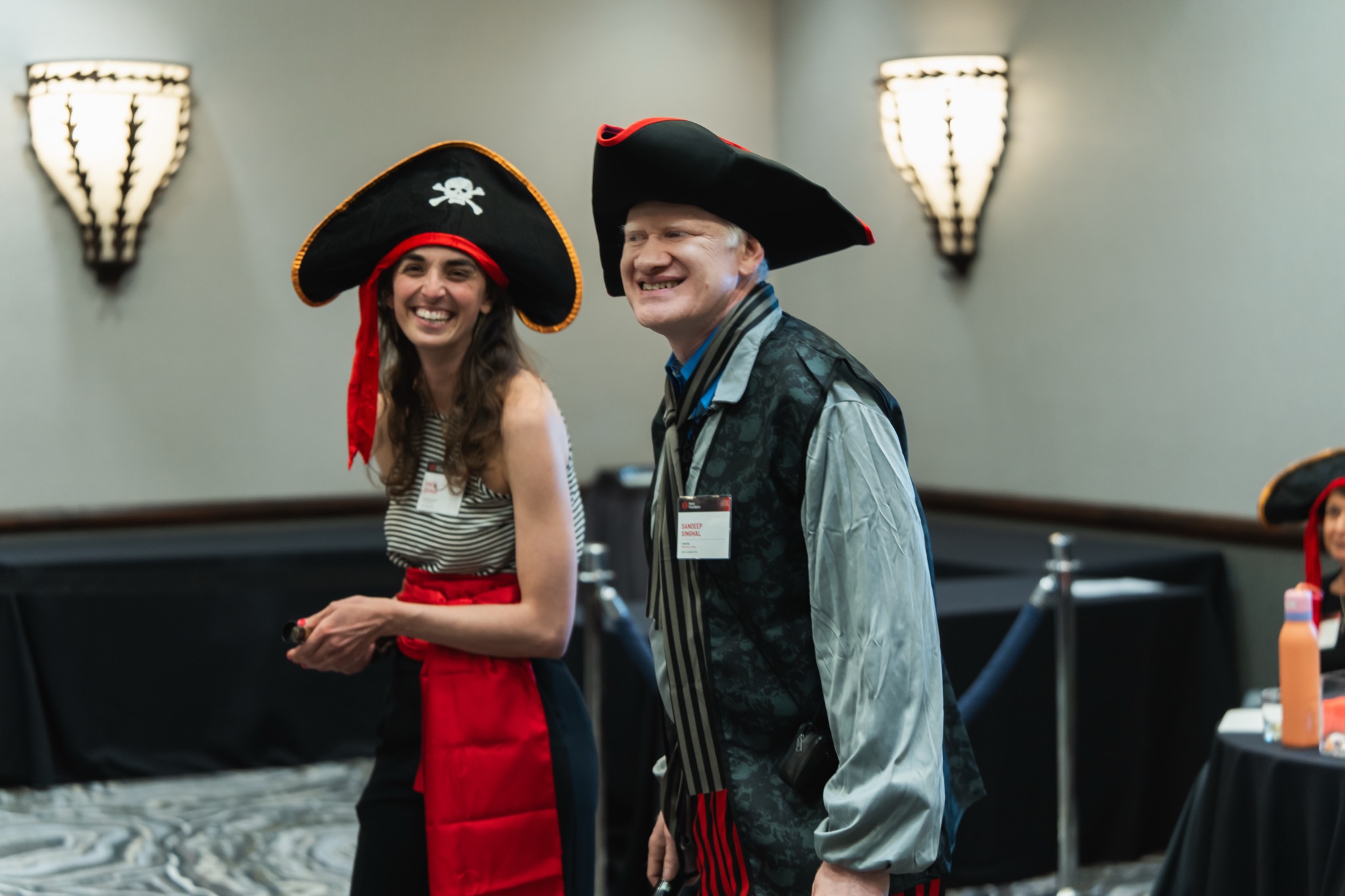
Humility of staff and volunteers creates a relaxed environment: The staff and volunteers who ran the engineering challenge did so dressed as pirates, making pirate themed jokes and contributing to the lighthearted atmosphere. It was entertaining to see people who have been extremely successful and influential in modern science embrace a sense of playfulness. We believe this was a key attribute for making this event so striking and impactful. These staff and volunteers fully engaged with the pirate theme, putting attendees in a mood to engage with the same level of fervor and excitement.
Activities are scientifically interesting: The activities were designed so that participants would be tested on their scientific validity. In this case, the constructions were put under the pressure of being on a shake table and being shot at by nerf guns. At the same time, the scientific knowledge needed to make good decisions in the activity is fairly accessible to a community where everyone shares a high baseline of basic scientific training.

Credit: Hertz Foundation
Informal Parallel Play and Collaboration
We also noted several instances of informal parallel play and collaboration indicating that attendees were keen to seek out ways to do things alongside one another. An illustrative example of this feature centered around the workshop venue’s piano. Multiple attendees are skilled musicians, including piano players, and took time to make improvisational music. Several attendees played alongside each other with two (or four) people playing the piano in unison.
While it may seem like an inconsequential and incidental occurrence, enabling folks to engage with each other musically required intentionality on the part of the workshop organizers. In pre-workshop visits to the workshop venue, a community member informed the lead organizer of the event that there was a piano, deciding that attendees would likely want access to it. She coordinated with venue staff to ensure that the piano was unlocked for the event, resulting in attendees providing beautiful music for everyone to enjoy. That attendees are not afraid to ask for or suggest the things that would make the workshop enjoyable indicates a positive culture of engagement.
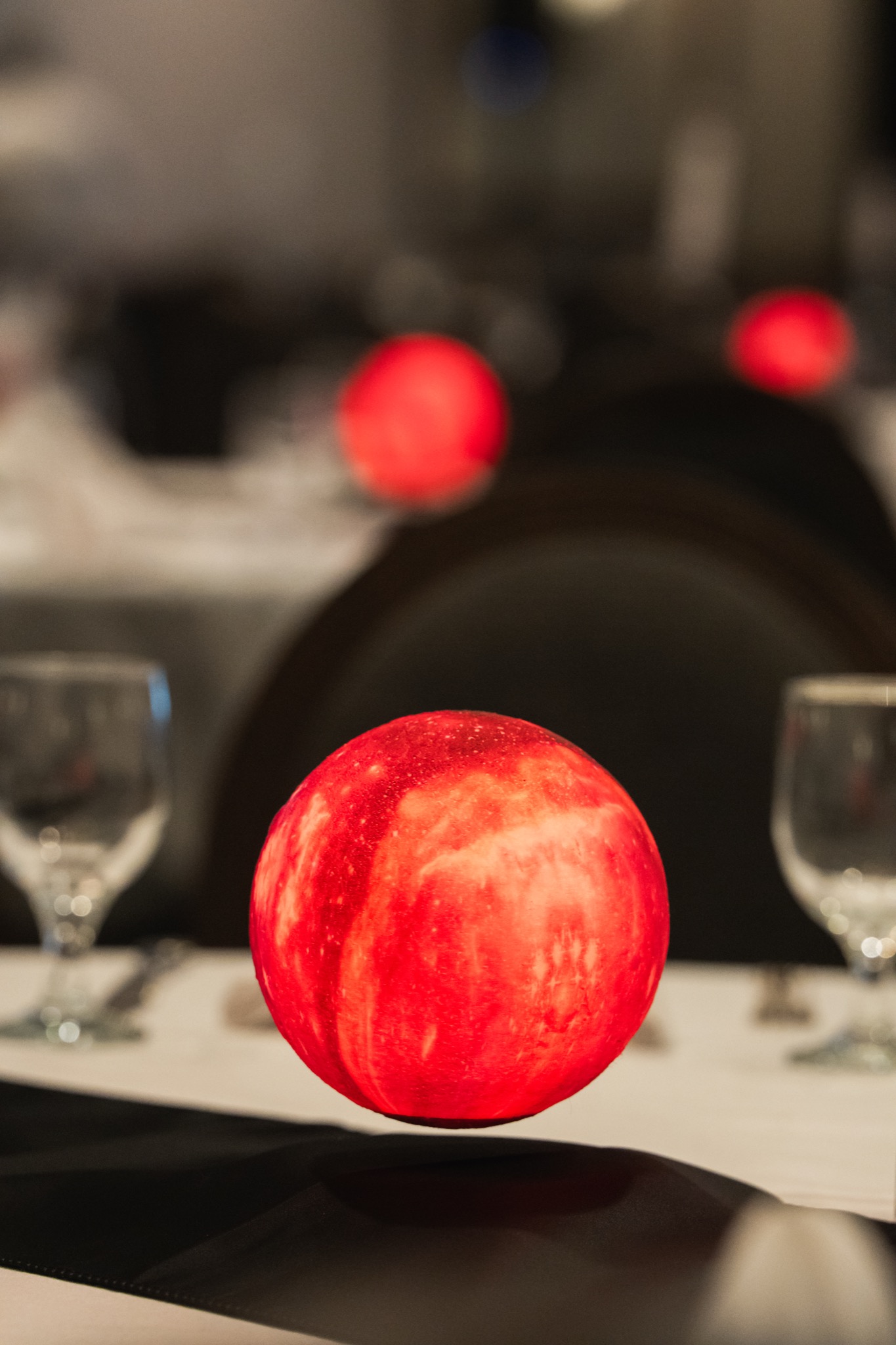
Another example of parallel play occurred at the dinner on Saturday night. Attendees were assigned to tables and the centerpieces for each table was a “floating orb” that had an LED light inside. Each of these centerpieces had a wooden base that allowed the orb to float via magnets. Attendees immediately began to play with the orbs, spinning them and commenting on them. When some of the orbs came off of the magnetic base, they worked to put them back onto the bases–some working individually and others working collaboratively. For most, this was a much more challenging task than they expected.
By the end of the evening there were two tables of people working together to try to put the orbs onto the magnetic bases and many of them had spent over an hour trying to do so, watching and helping each other. When someone would get their orb to float, the whole table would erupt in cheers. There was a convivial attitude towards sharing tips for lowering the orb and supportive atmosphere for folks to try (both fellows and plus ones). At the conclusion of the workshop, some of the attendees were able to take the orbs home and seemed excited to have them as mementos of their time together. The connecting time working alongside one another was seen in a positive light.
Workshop organizers created opportunities for this informal engagement with great intention. We observed, for example, that there were board games and card games available for attendees and we did see some use of those games. The environment of playfulness and attendees’ appreciation for it is perhaps best reflected by how multiple attendees referred to the event as a “math camp” for scientists. Given that folks attending the summer workshop are more likely than most to be exceptionally creative, oriented towards problem-solving and scientifically minded, it makes sense that they flourished in settings where there was parallel play - both formal and informal.
Credit: Hertz Foundation
Social Activities
The parallel play and collaborative activities described above were held during workshop hours, either as dedicated spots in the schedule or during breaks. Workshop organizers also build in formalized, dedicated social activity time that occurs outside of the workshop venue. Those who attended the social activities seemed to enjoy them and talked about their time in a positive light; in some cases, they wished for more time for such activities.
The 2025 workshop included two types of dedicated social activities: “After hours” activities, mainly attended by in-school and early career fellows, were organized by a workshop volunteer using a Whatsapp thread. This text thread was lively throughout the workshop, with people sharing pictures, asking to meet up with one another, and sharing stories. At a breakfast table, we observed a group of fellows discussing the new Hertz logo. One fellow made a comment that he would “save his thoughts for the after-hours meetup,” indicating that these coordinated social activities gave participants opportunities to unwind and have less-professional conversations than they might have inside the venue.
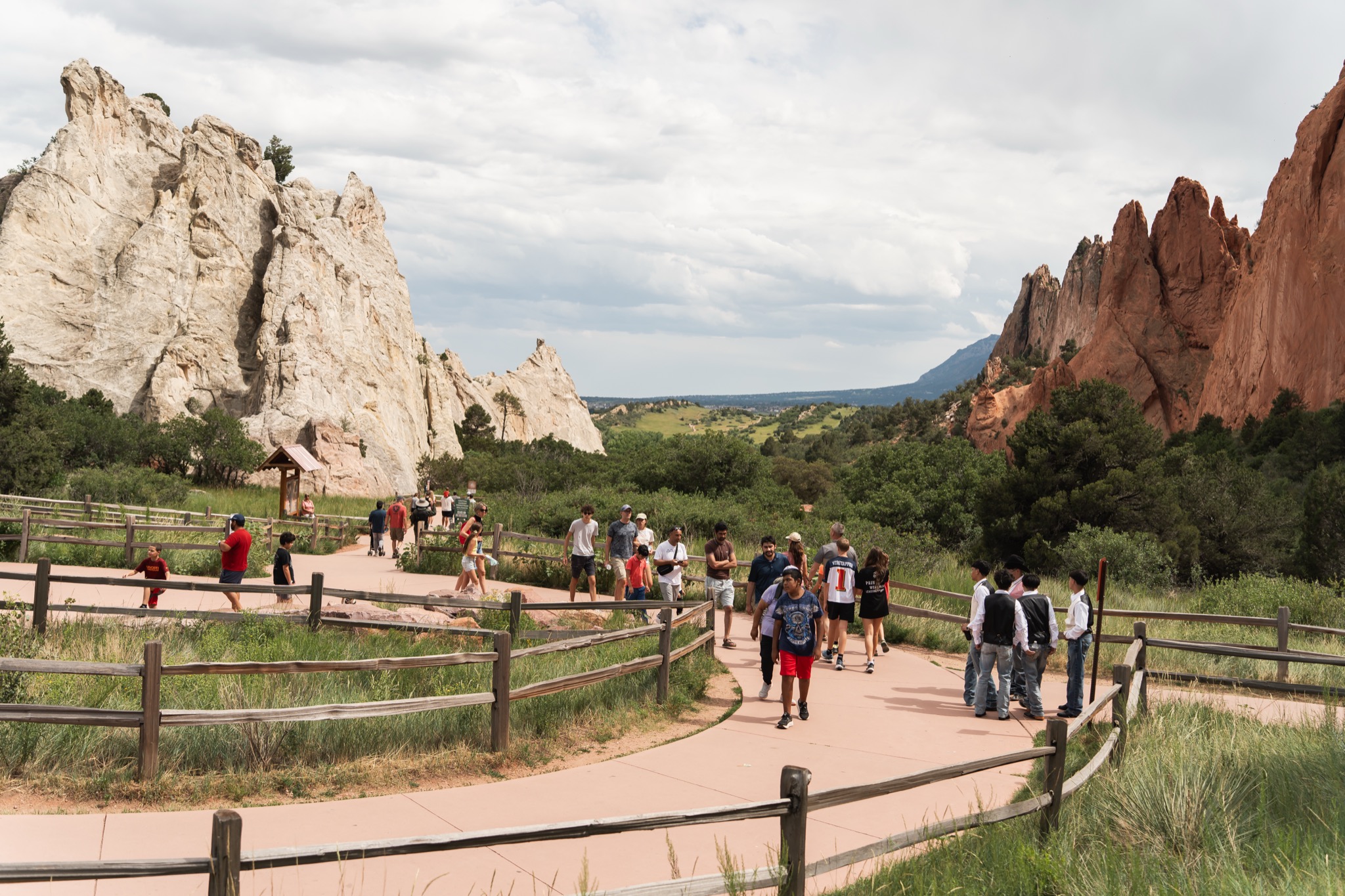
The second group of social activities were Saturday events planned to allow people to do activities like going to the Garden of the Gods, the WWII Aviation Museum, or to play pickleball. Generally speaking, folks seemed to like these events.
Some people mentioned these social activities as one of the highlights of the experience:
Saturday afternoon activities
Either the informal conversations and networking after hours or the downtime activity (pickleball) for me.
the socializing / hiking activity
One attendee talked about how he had spent time hiking with a colleague who did very different work than he did. Speaking with this individual in a hiking environment enabled him to get informal but very useful information about what his colleague worked on, without diving into too much technical detail.
Some others said they didn’t find the outings as fun as they had hoped. One mentioned that the Garden of the Gods was really popular and had lots of people, so the time they spent hiking was equal to the time they spent getting there and back on the bus. She felt it wasn’t as relaxing as she had wanted. Another respondent in the survey said “Maybe skip the outings.” Others noted in the survey that they desired more coordination during the social activity:
For the hike this year, people split up quickly and there wasn’t a chance to merge and recombine groups for new conversations like there had been in past years. Would’ve been nice to all head in the same direction together to have a chance to meet more people.
Inclusion
From our interactions with the workshop organizing team, it is very clear that the Hertz Foundation believes in and is committed to diversity and inclusion. The fellowship program also appears to do a good job ensuring its cohorts come from diverse backgrounds, particularly more recent cohorts. There are, however, additional opportunities to ensure diversity and inclusion at a number of different levels, most of which center on making attendees feel comfortable being their true selves at the workshop:
Families and Children
One of the key groups we saw that was generally well integrated into the conference were families with children and teenagers. On the whole, these attendees said their children really enjoyed the conference and liked attending the sessions. They specifically enjoyed attending and participating in the engineering challenge. We saw children in the partner breakout sessions, in scientific talks, chatting with people at social events and playing games on the deck.
One attendee said that it was their first time attending since they had been a fellow. He said that one of the reasons that he decided to come was because the materials indicated that his teenage son would be welcome at the event. We also talked with several attendees who brought along spouses, many of whom engaged in conversations with other attendees on their own.
The spouses and partners also seemed engaged, curious, inquisitive and well integrated into the event. One spouse spent some time talking with their partner about the topic that a speaker had brought up, asking scientific questions. The evaluator later saw that spouse talking with the speaker.
The biggest challenge we heard from attendees with families, however, was that the event was costly: Airfare, lodging and other costs totaled the price of a vacation and meant that this would be one of the family vacations for the year. This is a point worth considering when looking at event locations for future summer workshops. A comment from the survey encouraged future summer workshops to: “Keep encouraging family participation“ and “More family friendly”. This suggests that there may be more to do to make the event inclusive of folks who attend with their children and spouses.
Experience of Attendees Living with Disabilities
Evaluators observed at least three people who are living with visible disabilities and talked with them and their caregivers about their needs and the challenges they faced. We discussed those challenges–travel, mobility and accessibility, and caretaking–and how they overcame them to be engaged and focused at the meeting. Simple logistics like navigating the room or being able to get food back to one’s table could prove to be a struggle. We also heard the broader challenges they faced with regard to transportation to the venue, accommodations, and taking care of themselves during long days of socializing. This is not including the even broader challenges that fellows with disabilities face with health insurance, getting campus accommodations and more.
While attendees with disabilities felt that the event was good about supporting their needs, some concrete critiques emerged. In particular, the engineering challenge space was a problem for folks with disabilities and made it a less-than-ideal event in terms of accessibility. To be sure, there are some clear barriers and difficulties in attending any conference or large event; yet in conversation it was clear that there are incredibly difficult broader challenges that these folks may face that make their engagement even more challenging at the summer workshop. Whatever the foundation can do to support these folks would likely be very welcome.
Due to the nature of hidden disabilities, we did not know if there were folks with those challenges at the event and so we did not knowingly interview them. However, we did hear open conversations about mental health, anxiety and folks who are on the spectrum. We witnessed some attendees taking pains to socialize briefly and with people they already felt comfortable with. We heard attendees mention that other attendees “needed to take a minute” and some attendees left sessions quickly presumably to take a break from social interaction, or specifically go to talk to people they knew already. Explicit reassurance that such breaks are welcomed and encouraged, the addition of quiet spaces or sensory rooms, and optional sessions on mental and emotional health could be ways to make attendees feel more comfortable attending and being fully engaged.
Underrepresented Groups
An attendee indicated in the survey a desire to have spaces and/or auxiliary workshop events for underrepresented groups (“And it would be nice to have sessions for different spaces, e.g. a queer space”). We concur with this statement: In high-profile scientific settings, it is easy to feel like an outsider, particularly when part of an underrepresented group. Finding ways to connect folks with overlapping backgrounds should be a priority for the organizing team.
The survey also indicated that the geographic location of the workshop made attending social activities on- and off-site somewhat uncomfortable. In particular, an attendee shared an experience of feeling uncomfortable as a trans person due to poor treatment in public spaces. This comment included mention of seeing a person with a swastika tattoo. While much of this type of location-based bigotry is beyond the control of the workshop organizers, it may be worth considering what kinds of disclaimers, guidance, and support the Foundation can offer to attendees.
Survey response: “Great venue! I will say that the broader location was somewhat uncomfortable (I was stared at *a lot* by locals, including many who were staying at the resort, presumably because I am visibly trans). We also ran into someone with a swastika tattoo on the bar outing which made a lot of folks uncomfortable. However there is a balance between being cautious about avoiding places with people that may be hostile to our community members, and restricting our set of locations to a small bubble within the US.”
Preserving Community History
Workshop organizers place a significant focus and dedicate substantial effort to facilitating a playful atmosphere for attendees. The organizers also design more formal elements of the workshop to remind and reassure attendees that they are part of a strong, influential community of scientists and that their membership to the community is one part of a long, storied history of the fellowship program. In this way, the workshop also acts as a mechanism for preserving community history and making attendees feel a part of that history. Two key elements of the workshop reflect this intentionality:
Telling stories of the workshop and fellowship program’s origination: Throughout the workshop, staff and members of the Hertz community took opportunities to share the history of the workshop and the fellowship program’s origination. While attendees who have been in the community for a long time may have heard these stories a dozen times, re-telling helps newcomers understand important context, timelines, and events that shape what the community looks like today. From Ray Sidney speaking at the Saturday night dinner to longtime fellows explaining how the fellowship program has changed, storytelling helps the community feel a sense of belonging that other types of meetings do not typically convey.
Mourning the loss of community members and celebrating their legacy: A striking example of the workshop organizers’ commitment to building a strong community was the explicit portion of the workshop dedicated to remembering and celebrating Hertz community members who passed away in the last year. At face value, it is a nice gesture to celebrate the lives of folks who were committed to science and in many cases contributed to major scientific breakthroughs. From a community-building perspective, though, it is much more than a gesture: Fellows are reminded that they are part of a highly-impactful community and that their participation in the community is a part of their personal legacy. Attendees are reminded that they, too, will one day be remembered by the Hertz community alongside peers who are at the frontiers of science. In a profession that can be as isolated and often thankless as science, this type of assurance that Hertz will help preserve fellows’ legacies is a powerful, community-enhancing practice.
Credit: Hertz Foundation
Volunteers
The summer workshop organizing team strives to create an event that reflects the mantra, “For the Fellows, By the Fellows”: A successful workshop is one that engages the entire community, so its elements must therefore be tailored to fellows’ needs and norms. A key way the organizers implement this principle is by fellows as volunteers who help design, plan, and execute the event.
Fellows who volunteered at the 2025 workshop took on a variety of leadership positions: introducing speakers, giving short talks, guiding attendees to social events, interviewing potential fellows and more. These tasks are much different from the day-to-day activities fellows typically engage in–volunteers are all scientists on the cutting edge of their fields, so their willingness to participate in organizing and running the event signals the workshop’s importance to the broader community. Evaluators were struck by the engagement of folks who are medical doctors, electrical engineers at top universities, tech industry pioneers, and a host of other top-tier professions, particularly in their humility and orientation towards serving the community.
There was a culture of celebrating and thanking the volunteers who had made an impact both in the creation of the current summer workshop and the historical, cultural development of the workshop. One speaker talked at length about their volunteer experience, what they gained from it, and how they felt the Hertz Foundation had shifted over the years they had been a volunteer. Other volunteers were highlighted, applauded and given awards to celebrate the work they did.
Yet recognition did not seem to be the motivating factor for the fellow’s choice to volunteer: When asked why they volunteered, one volunteer told an evaluator that it was because someone she respected asked her to help. Another volunteer remarked that they wanted to contribute to the continual improvement they had seen in workshops over the years and that Senior Fellows had modeled the importance of volunteering to this improvement. Each volunteer we spoke with enjoyed the opportunity to collaborate and deepen their connections to one another. One volunteer mused that she would likely not know these other fellows as well as she does now if she hadn’t volunteered. For others, volunteering also offered a pathway to leadership and building community-centered skills. As an in-school fellow, the volunteer does not have many opportunities to learn how to build community, run events, and otherwise acquire “non-scientific” skills.
Hertz staff play a major role in promoting the benefits of volunteerism and in keeping volunteerism a low-stress, high-impact experience. We noticed in meetings and informal conversations between staff and volunteers, that the group had a sense of familiarity, collegiality, and lighthearted banter between them. We heard jokes, laughter, and people talking to each other openly. There was a sense of responsibility, but also a fun atmosphere. Staff was also clearly appreciative of the work that the volunteers had done and expressed that through individualized gifts and clear affection and warmth towards the efforts each had taken on.
Ensuring a positive volunteer experience also requires quickly and assertively addressing poor behavior. In on-the-ground volunteer/staff meetings, we observed the lead organizer calling herself out for a joke that could have been misinterpreted or harmful to the recipient; the organizer immediately apologized and reminded the team that each person should be comfortable with and responsible for holding each other (including her) to healthy communication norms. This culture of openness and feedback keeps volunteers feeling energized to engage and sets a model for the broader community to follow in terms of healthy, productive communication.
Evaluator Recommendations
As mentioned throughout the document, the workshop organizers’ intentionality, strategies, and unique approach to scientific community-building already far exceed expectations. Having been part of scientific communities and worked with others, we write this evaluation thoroughly impressed with the approach and believe it should be applied to all Hertz Foundation activities wherever possible (and perhaps even extended beyond the Hertz community). Our recommendations in this section are therefore oriented toward helping Hertz stakeholders think about how to build upon the existing model and apply it to new domains.
Augment and market the parallel play model: The playfulness of the summer workshop is a core feature that appears to be universally appreciated by attendees. The Foundation should consider
making playfulness an explicit marketing tool for attracting attendees to the workshop
doubling-down by offering even more opportunities for informal play.
Ideas we heard from attendees throughout the workshop included the addition of Legos, white boards, and musical instruments. Relatedly, we heard discussions of a component like a talent show, which we agree with given the exceptional artistic and musical skills we observed in the community.
Give and communicate more autonomy in group activity engagement: Some attendees felt rushed in their off-site group activity or otherwise felt the outings were not worth it. We suggest: (a) communicating that these activities are optional; (b) providing resources (e.g., a bus or other transport) for self-organized activities; and (c) soliciting input for what the activities should be each year, depending on the unique location.
Make diversity and inclusion an explicit goal: Building on the excellent inclusion that already exists, the foundation could do more to build support for specific groups:
Continue to find new ways to include families and spouses: Attendees mentioned they felt they could bring their children to the event because they had heard that this was acceptable. There is more that could be done to make the event accessible, welcoming and affordable for attendees bringing spouses, children and plus ones. The Foundation might consider, for example, offering a limited number of stipends to a rotating group of attendees to bring family members so that a wider swath of the community is able to enjoy the benefits of the welcoming atmosphere.
Revisit and refine the approach for including attendees with disabilities: Attendees living with disablities face a great deal of additional stress and challenges. It might be helpful for future events to have a staff person assigned to help folks who need physical or other accommodations at the event. Checking in with these folks at mealtimes and when seating themselves at talks could be a helpful way to ensure that the inclusion is more seamless. We would encourage the Hertz Foundation to also look holistically at ways to support folks with disabilities to better accommodate invisible disabilities and otherwise make the experience better for all.
Dedicated spaces for underrepresented groups: Attendees requested quiet spaces and LGBTQ+ spaces. We can extend this to any number of underrepresented groups allowing folks with overlapping backgrounds to connect with one another.
Disclaimers or guidance about geographic locations: There is a limit to how much can be done with regard to location-based bigotry. However it is worth considering what kinds of disclaimers, guidance, and support the Foundation can offer to attendees.
Implement lightweight mentorship models: Hertz community members appreciate the access they get to fellows at various career stages and the freedom they have to connect with anyone in the community. Some refinement is possible, however, in the ways in which the Foundation and the workshop support fellows at different career stages. Intentionally matching mid-career fellows with Senior Fellows and supporting dedicated time together, for example, could alleviate some of the time pressure on attendees to connect at the workshop. Other support structures should be developed in consultation with fellows at different career stages, perhaps with targeted surveys or focus groups to inquire about their needs.
Formalize storytelling about Hertz’s rich history: Attendees enjoyed the opportunity to learn about the history of the fellowship program and the workshop via firsthand accounts and talks. For those who cannot attend or who do not otherwise hear those stories, however, may not feel the same connection or gain the same understanding of the community’s history. Engaging in projects like oral histories, historical scientific impact evaluations of Hertz fellows’ work, and other history-oriented efforts would bring these stories to a wider swath of the community and provide a tool for engaging new donors.
Communicate volunteer authority to attendees: While volunteers’ experience was, in our view, largely positive, one major area of possible improvement is in communicating volunteer authority to workshop attendees. One of the volunteers responsible for the engineering challenge, for example, experienced pushback from attendees regarding the rules of the engineering challenge. The volunteer did not feel as if they were respected as an authority figure in enforcing the rules. Staff and other more formal authority figures should consider ways to remind the community that volunteers are considered workshop leaders and should therefore be treated with the appropriate level of respect and authority. Doing so might also attract additional volunteers who are seeking opportunities to develop leadership skills in non-scientific domains.
“Parallel play” is one component of Parten’s Stages of Play, which classifies the ways children interact in their development. From Wikipedia: “Parallel play (adjacent play, social coaction) – when the child plays separately from others but close to them and mimicking their actions.[2][3] This type of play is seen as a transitory stage from a socially immature solitary and onlooker type of play, to a more socially mature associative and cooperative type of play.”